
Fast Facts for Buyers:
-
The Dilemma: In Delhi’s standard stilt-plus-four configuration, the highest premiums are commanded by the extreme ends—the ground floor (often paired with a basement/lawn) and the top floor (paired with roof rights).
-
Pricing: A 217 sq. yard luxury ground floor builder floor in Defence Colony can list around ₹9.5 Cr. For larger 325 sq. yard plots, premium top-floor units often range between ₹16 Cr to ₹18 Cr.
-
Demographic Split: Ground floors are highly sought after by multi-generational families with elderly members. Top floors attract younger HNI buyers, expats, and entertainers.
-
Legal Nuance: Terrace rights grant exclusive usage permission for the top floor owner, but structural ownership of the roof framework usually remains shared among all residents.
When purchasing a luxury builder floor in South Delhi, buyers are almost always forced to choose between earthy convenience and sky-high privacy. Both a defence colony ground floor with lawn and a top floor with an exclusive terrace offer incredible lifestyle upgrades, but they come with distinct maintenance realities and legal nuances that brokers rarely discuss upfront.
Here is the ultimate reality check for your top floor vs ground floor defence colony debate.
Price Premium: What Are You Actually Paying For?
In the current Defence Colony market, the price gap between the middle floors (First and Second) and the premium floors (Ground and Top) can exceed ₹3 Crores to ₹5 Crores on a standard 325 sq. yard plot.
-
The Ground Floor Premium: You are paying for high land share, seamless accessibility, and often the inclusion of a lower ground floor (basement) that functions as a home theater, gym, or expansive lounge.
-
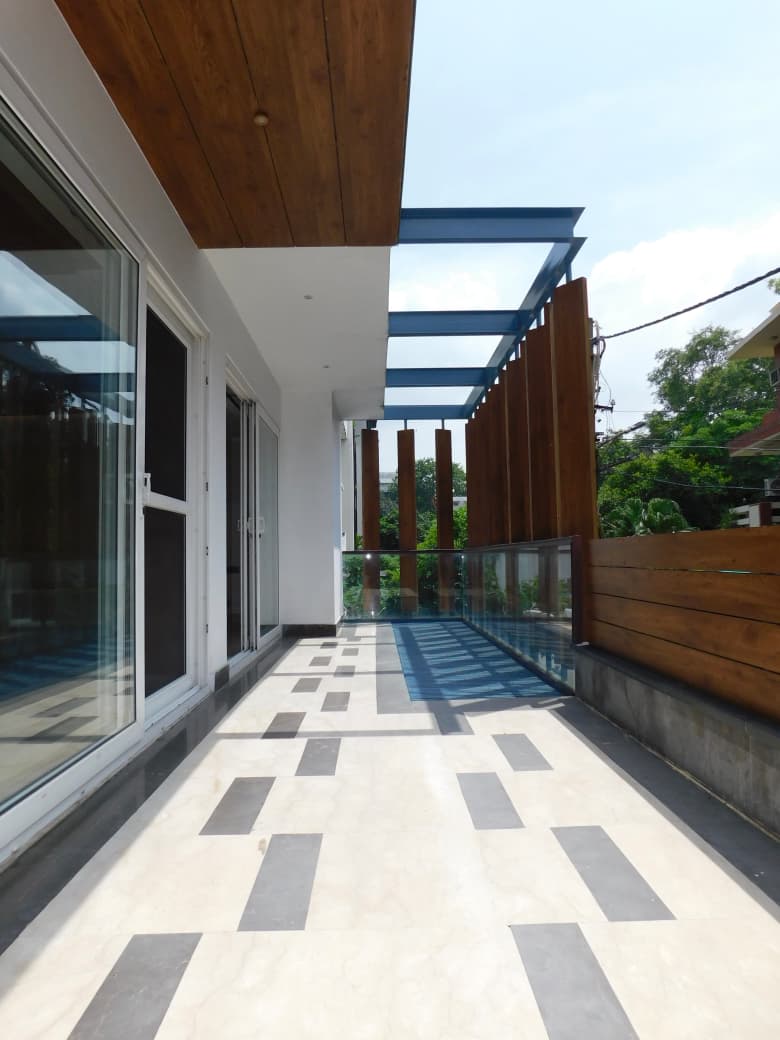
The Top Floor Premium: You are paying for an expanded lifestyle footprint. A terrace rights builder floor south delhi purchase grants you the ability to build a private rooftop garden, a gazebo, or an entertainment deck, effectively doubling your hosting space.
The Ground Floor Reality Check: Accessibility vs. Maintenance
The Pros:
A ground floor is the ultimate multi-generational asset. It completely removes elevator dependency—a critical factor for families with elderly parents or those concerned about power outages. The private rear setback often functions as a small, exclusive lawn or winter sunning area.
The Cons (Maintenance Reality):
-
Dampness and Seepage: Being closest to the foundation and the stilt parking area, ground floors are highly susceptible to capillary dampness. If the builder compromised on damp-proof course (DPC) layers during construction, you will fight peeling paint and musty smells every monsoon.
-
Privacy & Noise: You share a wall with the building’s main lobby and driveway. You will hear every car entering the stilt parking and every domestic worker using the common staircase.
-
Security: Ground floors require robust security grilles and reinforced perimeter walls compared to elevated units.
The Top Floor Reality Check: Privacy vs. Roof Rights
The Pros:
Top floors offer unmatched natural light, superior cross-ventilation, and zero overhead footstep noise. More importantly, builder floors with clear terrace rights attract premium buyers and show strong resale demand because private outdoor spaces are incredibly rare in South Delhi.
The Cons (Legal & Maintenance Reality):
-
The Terrace Rights Illusion: Many buyers mistakenly assume the terrace automatically belongs to the top floor owner. In reality, terrace rights refer to exclusive usage permission (like seating or gardening). You must legally verify your sale deed and builder-buyer agreement to confirm these access rights.
-
Common Services Access: Even with exclusive terrace rights, the water tanks and lift machine rooms for the entire building are on the roof. Your agreement must clearly define how and when other floor owners or maintenance staff can access the terrace to service their utilities.
-
Elevator Dependency: While modern builder floors feature branded lifts with power backup, any mechanical failure means a four-story climb—a dealbreaker if you have bad knees.
-
Heat Insulation: The top floor takes the brunt of the Delhi summer sun. Expect higher air-conditioning bills unless the builder used high-grade thermal insulation on the roof slab.
Resale Liquidity & Investment Verdict
Both floors offer excellent resale liquidity, but they cater to entirely different buyer profiles.
If you view your home as a long-term, multi-generational anchor and want to avoid the logistical hassle of stairs, the ground floor is the safest, most liquid asset in Defence Colony.
However, if you prioritize lifestyle, host frequent gatherings, and value absolute privacy, securing a top floor with airtight terrace rights yields a higher lifestyle dividend. Just remember to rely on rigorous paperwork, not verbal assumptions, to secure your rooftop oasis.
